Zellige vs ceramic subway tile: what's actually different
Zellige is handmade glazed tile, cut by hand, so no two pieces are the same size, thickness, or color. Ceramic subway tile is made by machine, so every piece is the same, and that one difference changes how each looks on the wall, how it has to be set, and what it costs.
Both can make a beautiful shower or backsplash. Which one is right depends on what you want the wall to feel like, and on who sets it.
What zellige is
Zellige is a glazed clay tile made by hand, a craft that comes from Morocco. Each piece is shaped, glazed, and cut by hand.
Because of that, nothing about it is uniform. The glaze pools thicker in some spots and thinner in others, so one box holds light pieces and dark ones. The surface has small pits and ripples. The edges are not quite square, and the thickness changes from piece to piece.
All of that is the point. Light hits a zellige wall differently at every piece, so the wall looks alive instead of flat.
What ceramic subway tile is
Ceramic subway tile is pressed by machine and glazed evenly. Every piece is the same size, the face is flat, and the color is consistent from box to box. Three by six is the classic size, and it comes in many others now.
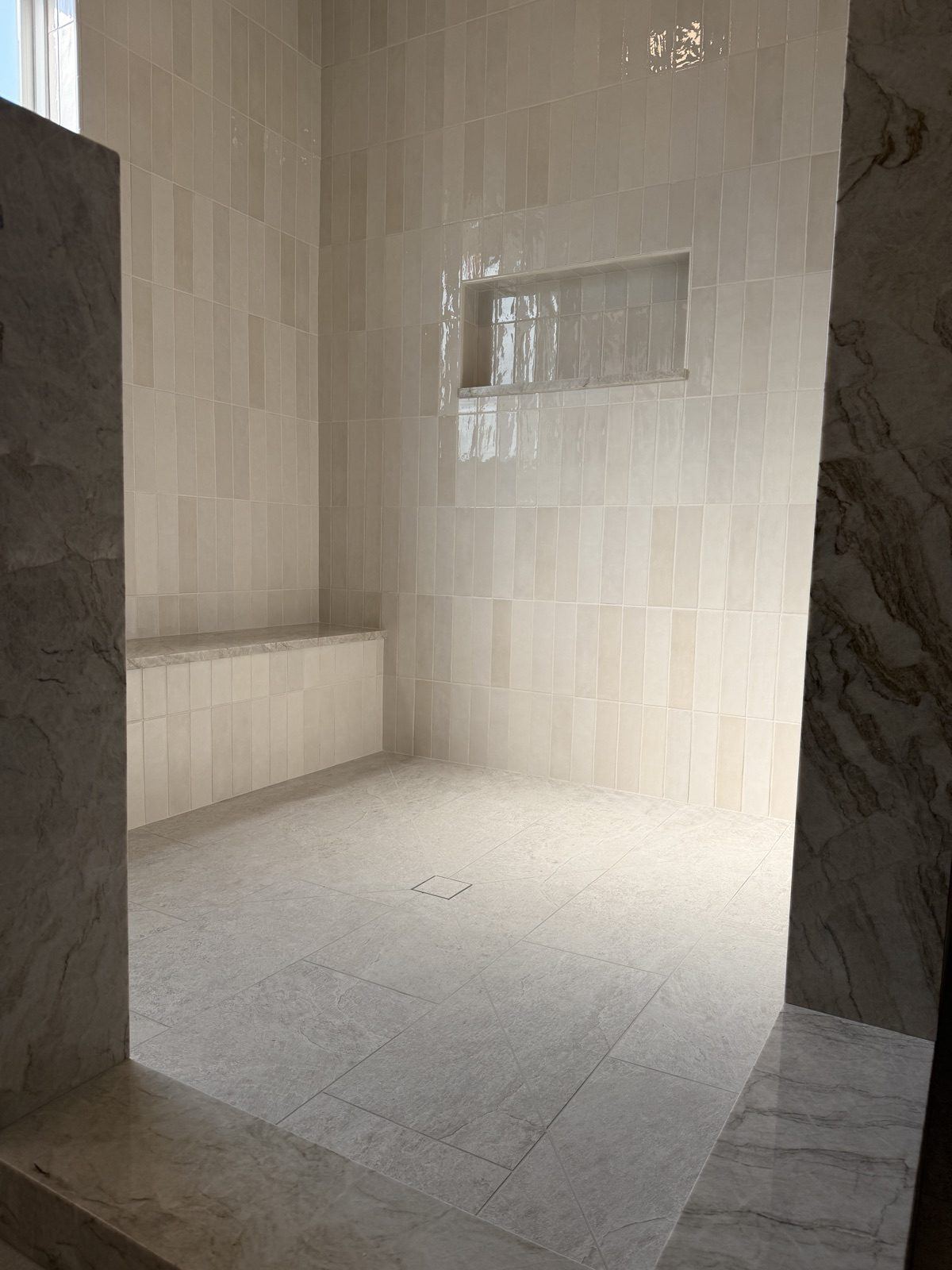
That consistency is its strength. A subway wall reads as crisp and calm. The grout lines are straight and even, and they become part of the design. A beveled version adds an edge that catches light.
There is a third category worth knowing: handmade ceramic. It warps a little in the kiln on purpose, which puts it closer to zellige in how it looks and how it is set.
How they look on the wall
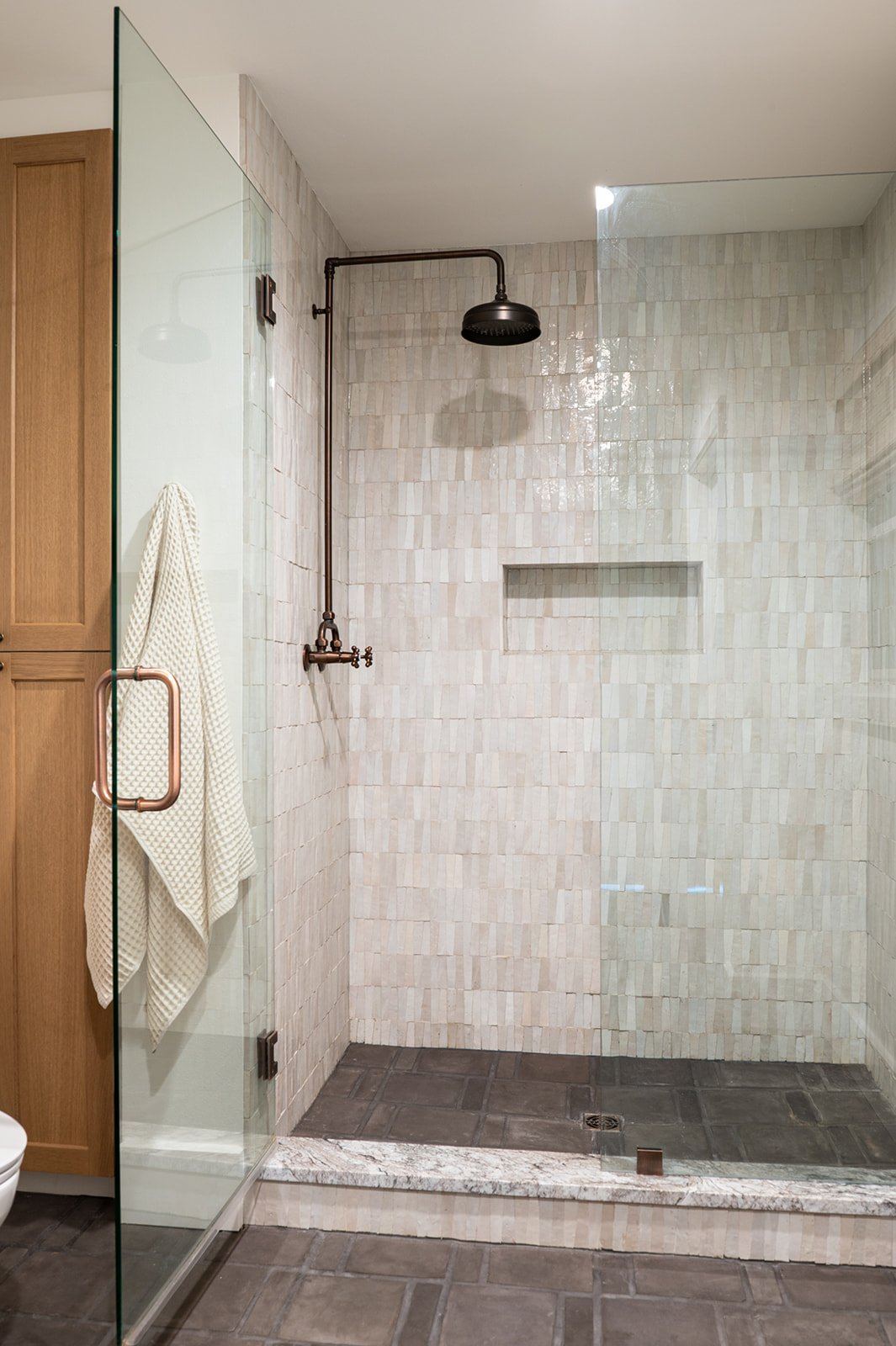
On a zellige wall, the pieces sit tight to each other and their edges vary, so the grout lines nearly disappear. What you see is the glaze: the shifts in color, the ripples, the way a brass fixture reflects in it. From across the room it reads as one rich color. Up close, every piece is different.
On a subway wall, the grout line is half the look. A dark grout outlines every tile and makes the pattern the feature. A grout that matches the tile makes a quiet wall and lets the fixtures or the floor take the attention.
That is why we recommend getting the tile up first, before choosing grout. It changes the feel of the room. Then we bring the grout colors in and help you choose with the real tile on the wall, because what looks right in the showroom doesn't always serve the space once the tile is installed.
How each one is set
Ceramic subway tile is set to a line. The pieces are the same, so spacers keep the joints even and the wall goes up box after box, as long as the wall behind it is flat, plumb, and square.
Zellige doesn't come in straight lines. We lay the pieces out dry first. We blend the boxes so the color varies evenly across the wall instead of landing in patches. Then we set each piece by hand to the piece next to it, not to a line, so a thick piece and a thin one end up flush with each other.
That's what makes it beautiful, and it's why a crew that sets subway tile all day can make it look wrong. Set to a grid, zellige looks like a mistake. Set piece to piece, it looks the way it does in the magazine. There are many tricks and important steps for installing zellige correctly, and only a skilled and trained installer should handle it.
What each one costs
Handmade tile costs more per foot and takes longer to set. Both parts of that are true for zellige: the tile itself, and the time it takes to lay it out, blend it, and set it piece by piece.
Ceramic subway tile is the less expensive of the two in material and in time. Neither is a shortcut. A subway wall set on a wall that isn't flat shows every wave in the grout lines, so the prep is the same either way.
Which one for your room
Zellige is for a wall that is meant to be the feature: a shower, the wall behind the range, a powder room where one wall carries the room.
Subway is for a calm, crisp wall that lets something else be the feature, a patterned floor, a stone bench, a run of brass.
If you have a photo of a wall you love and aren't sure which it is, bring it. We'll tell you what the tile is, what it costs, and what it takes to set it that way.
Questions people ask
Is zellige hard to install?
Yes. Every piece is a different size and thickness, so it's set by hand, piece to piece, instead of to a grid. That's why it looks the way it does, and why it should be set by someone who's done it before.
Can zellige go in a shower?
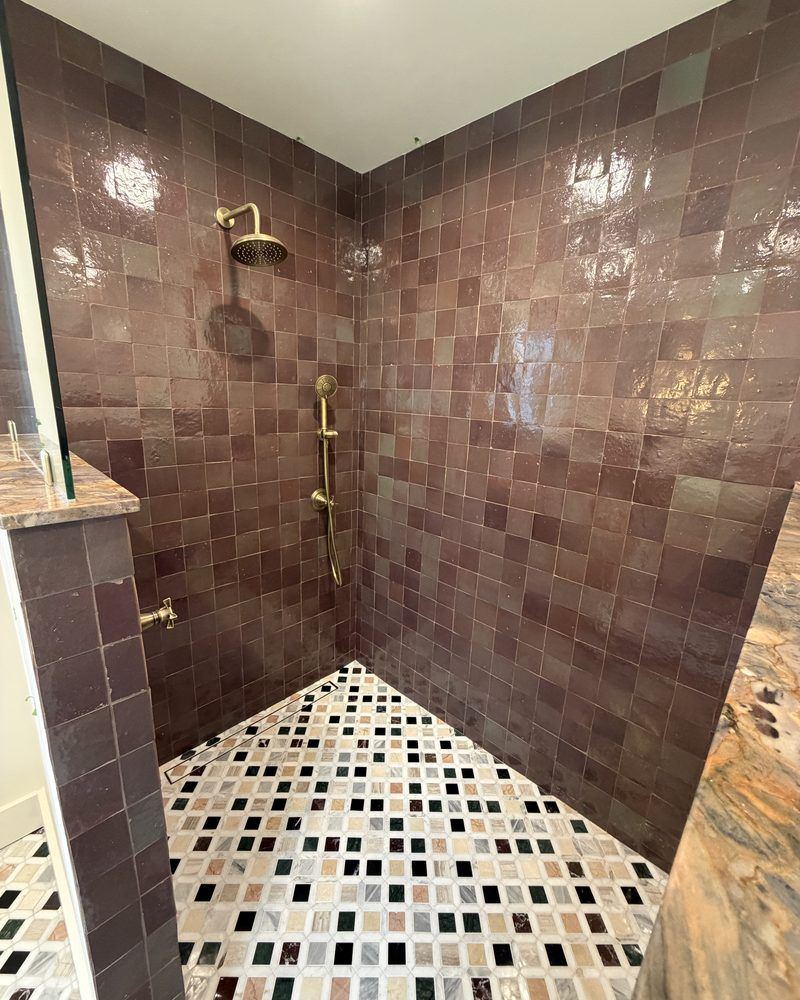
Yes. Both zellige showers above are built that way. Underneath, a zellige shower is built the same as any shower we do: a sloped pan and a full waterproofing system, floor to ceiling, with the tile installed last.
Why are the grout lines so thin on zellige?
Because the pieces are set tight to each other and their edges are not perfectly square, so the joint is narrow and varies a little from piece to piece. That is how zellige is meant to look. A wide, even grout line would hide the thing you bought it for.
Is subway tile always ceramic?
No. Subway is a shape, not a material. It comes in ceramic, porcelain, glass, marble, and handmade ceramic. Handmade ceramic subway warps a little in the kiln on purpose, so it is set more like zellige than like machine-made tile.
Have a tile in mind?
Zellige, marble, and handmade tile, laid out dry, blended, and set by hand. Read more on our luxury tile and stone page, call (208) 306-4004, or send us a quote request. We reply within one business day.
Every project is covered by our 2-year workmanship warranty, and enrolled in manufacturer lifetime warranties where applicable.
*Header photo: plum zellige shower, built for Greyhouse Design Co. Handmade glazed tile over a mosaic floor with brass fixtures.*


