Why do tile showers leak? The five places it goes wrong
Tile showers leak because the waterproofing behind the tile is missing, flat, or interrupted, not because of the tile itself. Tile and grout shed water; the system underneath is what stops it, and there are five places that system most often goes wrong.
Most people look for a leak in the wrong place. They look at the grout.
Grout is not what keeps the water out
Tile and grout are not waterproof. Water gets through grout joints in every shower, every day, in small amounts, and that is expected. A shower built right has a complete waterproofing system behind the tile that catches that water and sends it to the drain.
So a cracked grout line is not the leak. It is a symptom. Cracked grout, a corner that is starting to darken, a loose tile, a stain on the ceiling below: these are what a homeowner sees. What caused them is behind the wall, in one of five places, and you cannot tell which one from the surface.
1. The pan is flat
The shower pan is the sloped floor under the tile. In most of our showers it is made with sloped concrete, built by hand, so water moves to the drain and nowhere else.
The slope has to be in the waterproofed layer, not just in the tile. Water that gets through the grout lands on that layer. If it is flat, the water sits there. If it is sloped, it runs to the drain.
A pan that isn't sloped right is why showers leak, stay wet, and grow mildew in the corners.
We wrote a whole guide on this: what is a sloped shower pan, and why does it matter.
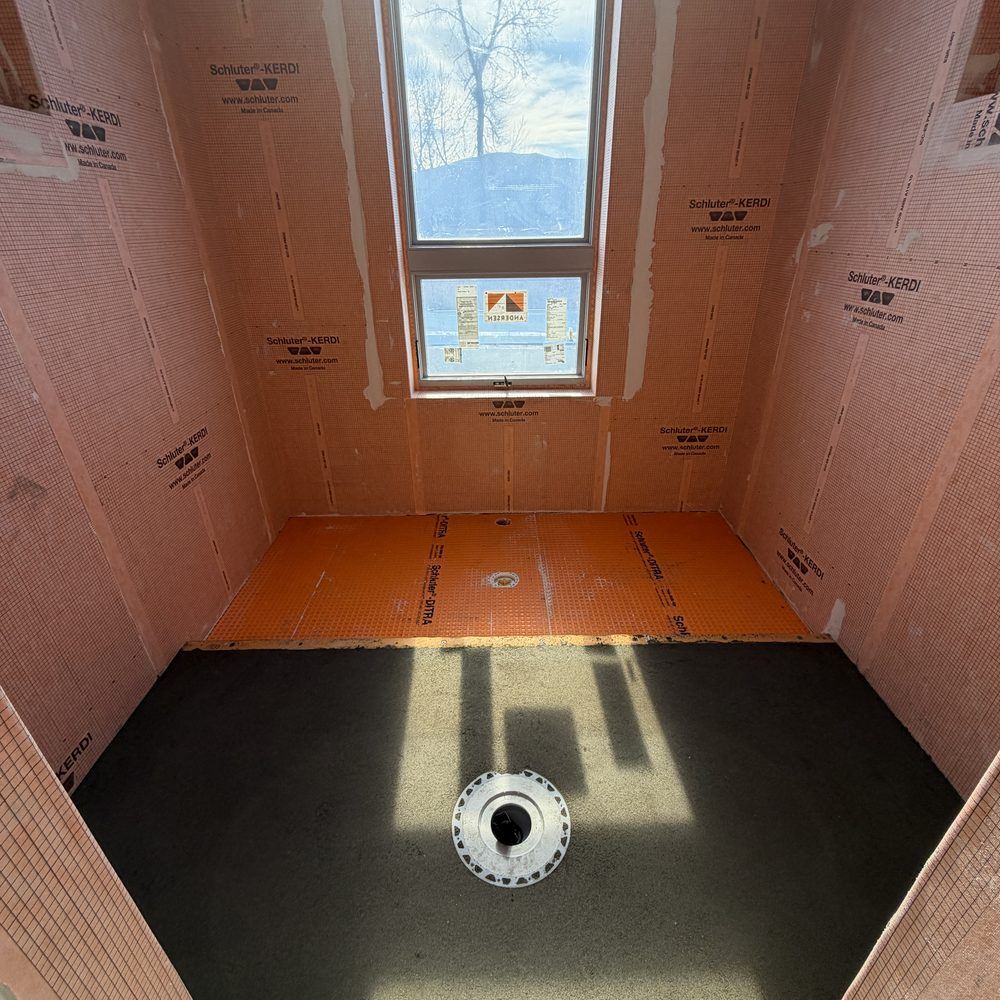
*A shower before any tile. The walls are covered floor to ceiling with the seams sealed, the pan is sloped to the drain, and the drain is set. Timeless Creations job-site photo.*
2. The walls were never waterproofed
Some showers are built with a backer board on the walls and nothing else. Backer board holds tile. It does not stop water. Others get a thin coat of something on the surface and are called done.
The walls of a shower need a full waterproofing system, floor to ceiling. Not just a coat of something on the walls, but a system planned for function. That means a membrane or waterproof board on every wall, carried all the way up, with every seam sealed and every edge tied into the pan below it.
Before any of that goes on, the walls are made flat, plumb, and square. Tile can only be as straight as what it is sitting on, and the waterproofing needs a sound, even surface to bond to.
3. The corners are not continuous
A flat wall is the easy part. The places that fail are where one surface meets another: the inside corners, where the walls meet the pan, the edge of a niche, the top of a bench, the curb.
Every one of those is a change of direction, and at every one the waterproofing has to carry over without a break. A membrane that stops short at the corner, or a seam that was never sealed, is an open door, no matter how well the rest of the wall was done.
Corners are where a waterproofing system is either continuous or it isn't.
Niches, benches, and curbs each add more corners. They are framed in before the waterproofing goes on, so they become part of the system instead of a hole in it.
4. The drain is not tied into the system
The drain is the one opening in a shower that is there on purpose. Every drop the system catches ends up in it, so the waterproofing has to connect to the drain, not just stop near it.
When the waterproofing is not sealed to the drain, water that reaches the drain opening runs down the outside of the pipe instead of the inside. That is one of the ways a shower leaks into the ceiling below with no sign of trouble in the shower itself.
A linear drain along one wall works the same way. The floor slopes one direction toward it, and the waterproofing is sealed to it along its full length.
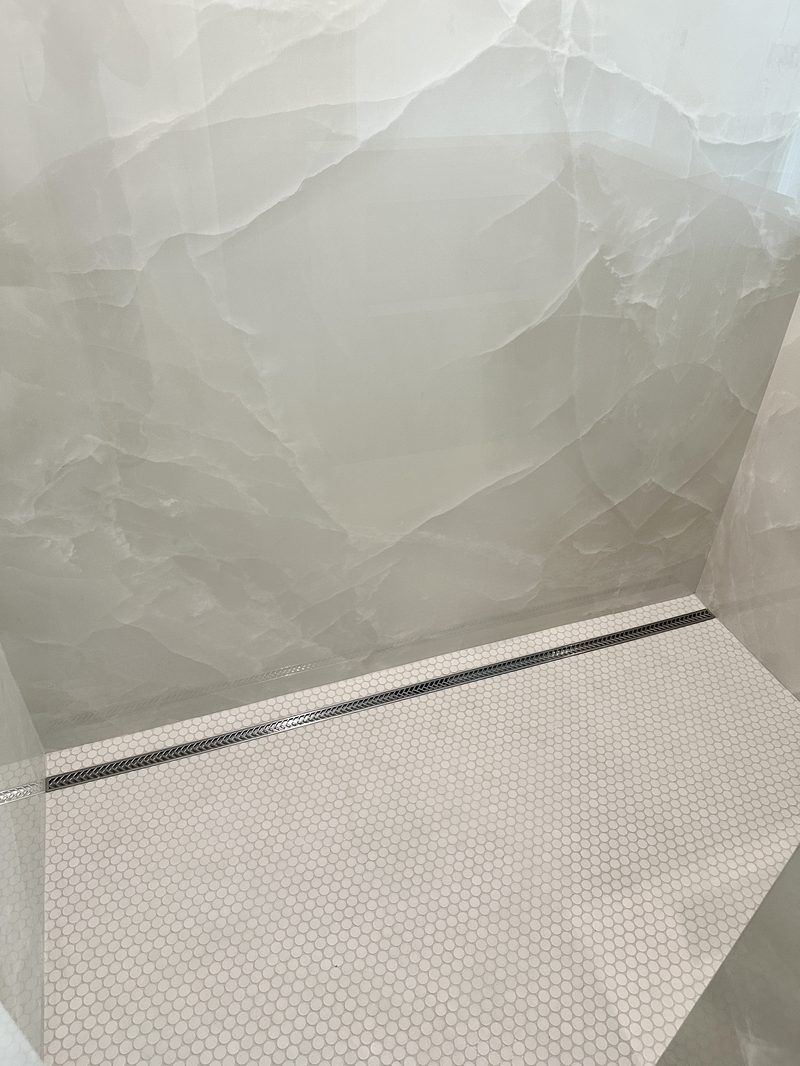
*A linear drain along the back wall of a large-format porcelain shower, over a penny round floor. The floor slopes one way toward the drain. Timeless Creations project.*
5. The holes made after the fact
The waterproofing is finished, the tile is in, and then the shower gets its hardware. The valve, the shower arm, the glass, a grab bar, a shelf. Each one goes through the tile and into what is behind it.
Each of those openings is planned before the waterproofing goes on and sealed when the hardware goes in. Shower glass is measured after the tile is in and installed last, and its fasteners are sealed as they go.
The one that comes up most often is a niche cut into a finished wall. A niche framed in while the wall is open is part of the system. One cut in afterward is a hole in it.
Why two showers look the same on day one
Picture two contractors building the same shower. Same tile, same fixtures, same price range. On handoff day you would have a hard time telling them apart. Five years later, one still looks like day one. The other has a cracked grout line, a corner that is starting to darken, and a homeowner wondering who to call.
All five of those places are covered up by the time the tile goes in. A shower fails from the inside. So we build the inside first.
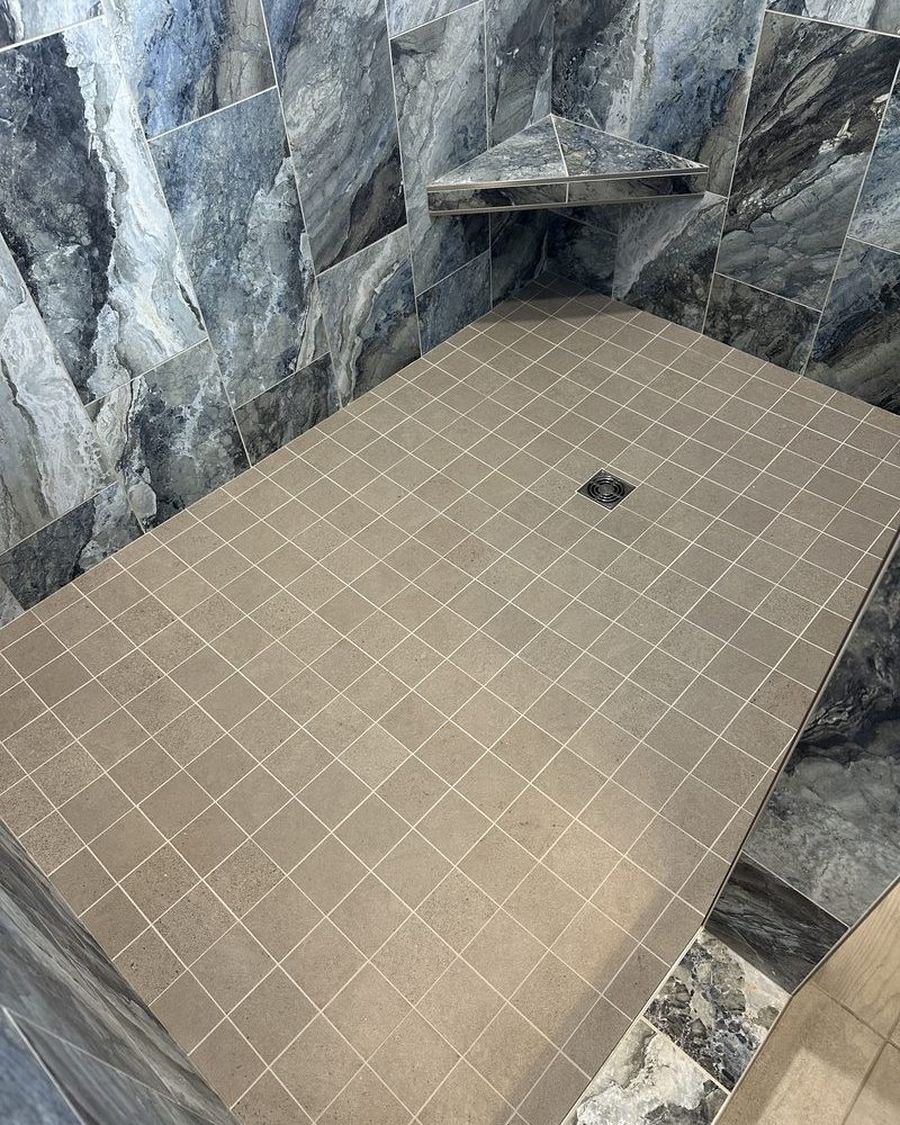
*A finished shower floor, sloped to the drain. The slope in the tile is built into the waterproofed pan underneath it. Timeless Creations project.*
What to ask before you sign
You do not have to know how to build a shower to protect yourself from a bad one. Ask the installer:
- How is the pan sloped, and is the slope under the waterproofing or only in the tile?
- What goes on the walls, and how far up does it go?
- How are the corners, the niche, and the curb carried through?
- How does the waterproofing connect to the drain?
- Who seals the holes for the valve and the glass?
We put every line of the work in writing before we start, so you can see what is behind the number.
Questions people ask
Does cracked grout mean my shower is leaking?
Not on its own. Grout was never the waterproofing, so a cracked joint by itself does not let water into the house. It can tell you that something behind it is moving and water has been getting through for a while. Whether it has reached the framing depends on what was built behind the tile, and that cannot be seen from the surface.
How can I tell if my tile shower is leaking?
Look for grout that is cracked or crumbling, a corner that is darkening, a tile that sounds hollow or has come loose, a soft spot in the floor at the curb, or a stain on the ceiling below. Any one of those means water is going somewhere it shouldn't. Which of the five places caused it takes opening the shower up to know.
Can a leaking shower be fixed, or does it have to be rebuilt?
The waterproofing lives behind the tile, so a real fix means getting to it. Regrouting or recaulking covers the symptom for a season and the water keeps going where it was going. Our preference is to remove the existing material and start over from scratch, with a sloped pan, a full waterproofing system, and the tile installed on top of both.
Is a paint-on waterproofing product enough?
A thin coat on the surface is not a system. What matters is that the waterproofing is complete: carried over every wall and corner, tied into the pan and sealed to the drain, with the thickness and the corner treatment the product calls for. We build every shower with a full waterproofing system, floor to ceiling, not a coat of paint-on product.
Thinking about a shower that will still be dry in ten years?
Tell us about the shower you have in mind and we'll walk the project with you. See our custom showers page, call (208) 306-4004, or send a few details through the quote form.
Every project is covered by our 2-year workmanship warranty, and enrolled in manufacturer lifetime warranties where applicable.
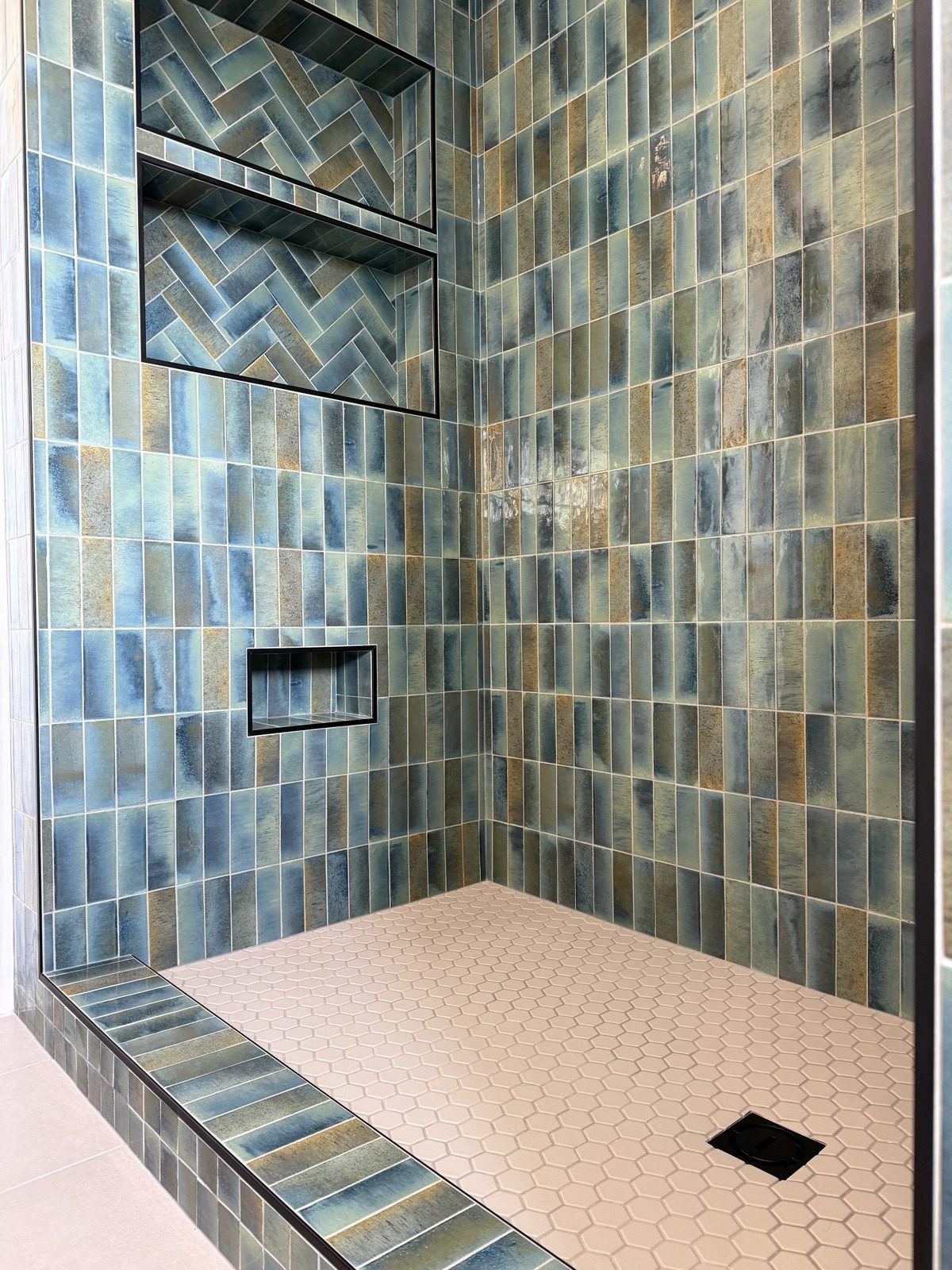
*Header photo: a green ceramic tile shower, stacked vertically, with two herringbone niches, a hex mosaic floor sloped to a square drain, and a tiled curb. Timeless Creations project.*


