What is a sloped shower pan, and why does it matter?
A sloped shower pan is the floor under your shower tile, built so every part of it falls toward the drain. It matters because water goes where the floor sends it, and a floor that sends water anywhere but the drain is a shower that will fail from the inside.
That is the whole idea. The rest of this guide is what it looks like in practice, how we build ours, and what to ask about before you sign for a new shower.
The floor you never see
When you stand in a finished shower, you see tile. Under the tile is the pan.
Tile is not waterproof. Grout is not waterproof either. Some water always works its way through to the layer below. A well-built pan expects that. It catches the water under the tile and moves it to the drain, where you never see it.
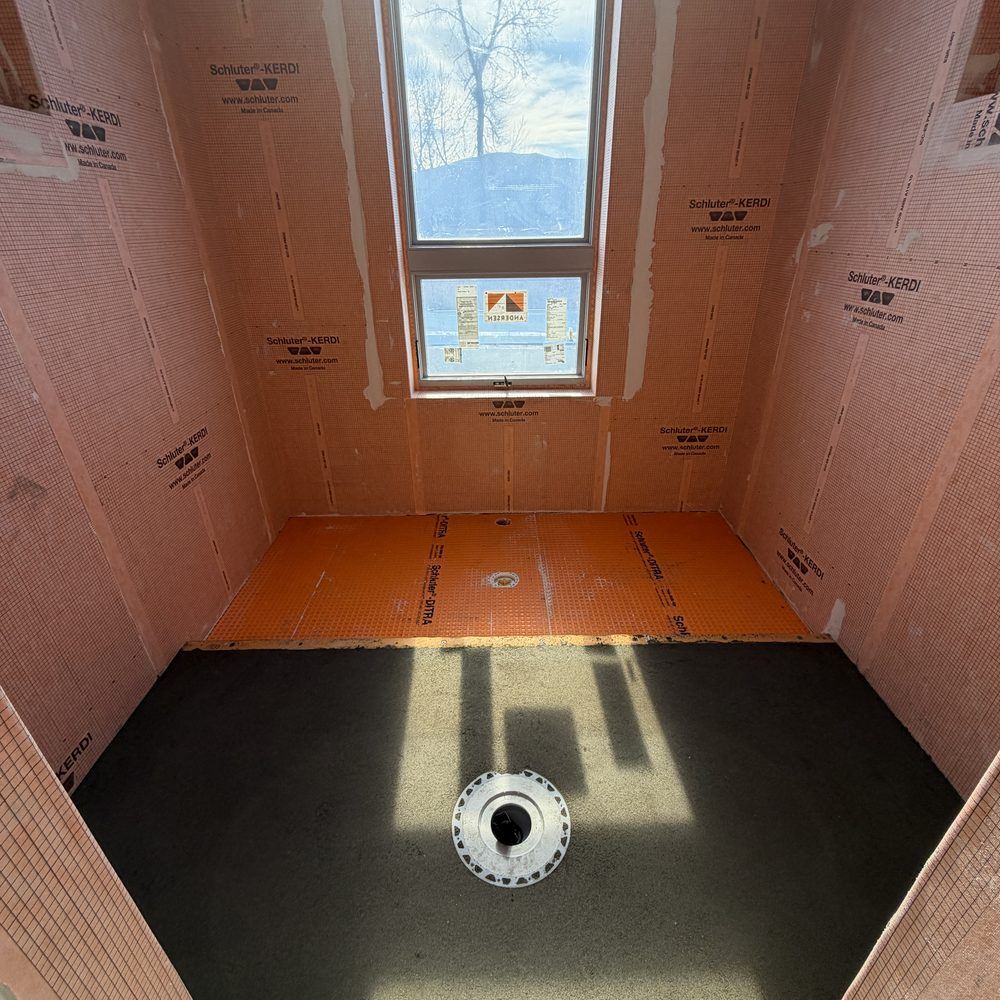
A shower fails from the inside. So we build the inside first. Most often our shower pans are made with sloped concrete, built by hand, so water moves to the drain and nowhere else.
What "sloped" actually means
The standard most building codes and tile manufacturers call for is about a quarter inch of fall for every foot of floor. Across a three-foot shower, that is roughly three quarters of an inch from the wall down to the drain.
You can't see that much slope. Your feet can feel it, a little, and the water finds it every time.
The slope also has to be even. A floor that leans toward the drain overall, but has a low spot along one wall, will hold water in that low spot. A corner that is flatter than the rest stays wet long after the shower is off. That is where the darkening starts.
So a pan is not just "tilted toward the drain." It is shaped so that every point on the floor has a downhill path to the drain, with no dips along the way.
Why we build ours from concrete
A pan built by hand from sloped concrete can be any shape the room needs. The drain can sit in the middle, in a corner, or along one wall. The slope can be set to the room you have, not to a size chart.
That is why we can build the shower you want instead of the shower that fits a pre-made tray. A linear drain along one wall, for example, lets the floor slope one way so large-format panels run right to the edge. A curbless shower slopes inside the pan so the whole bathroom floor runs flat into the shower.
The pan is poured, shaped, and checked before anything goes over it. Then the waterproofing goes on top of it, and only then the tile. Tile is the last thing we do.
The pan is one part of a system
A sloped pan on its own does not make a shower waterproof. It moves water. Something else has to keep that water out of the house.
That is the waterproofing system. Not just a coat of something on the walls, but a system planned for function. It runs floor to ceiling and connects to the pan, so water that gets behind the tile on a wall ends up at the same drain as the water on the floor.
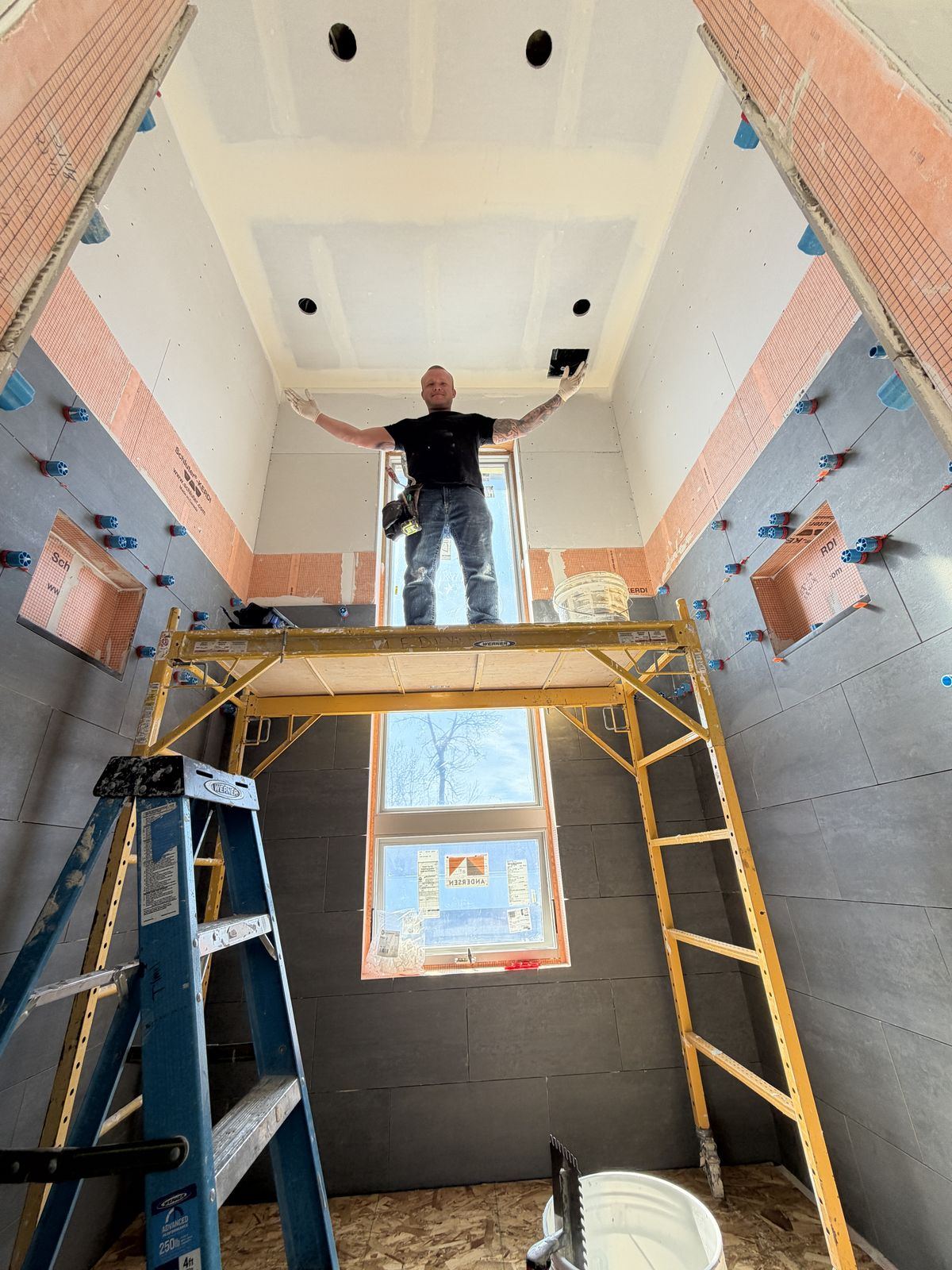
Everything that touches the pan has to be part of that system. The curb gets fully wrapped. A bench or a niche is waterproofed the same way as the walls. The drain is set into the pan so the membrane seals to it.
Before any of that, the surfaces behind the tile have to be flat, plumb, and square. Tile can only be as straight as what it's sitting on. A pan built on a floor that flexes, or walls that lean, will not stay right for long.
What a bad pan looks like a few years in
A pan that isn't sloped right is why showers leak, stay wet, and grow mildew in the corners.
From the surface, you can't see the pan. What you can see are the signs. Water still standing on the floor an hour after the shower is off. A corner that is starting to darken. A grout line that has cracked or crumbled. A tile that moves under your foot.
None of those tell you for certain what is underneath. They do tell you what a rushed install looks like a few years in. The same shower, built by two different contractors, can look identical on handoff day. Five years later, only one still does.
Almost everyone we meet has a contractor story, and showers are where many of them start. If that's you, it wasn't your fault. A bid built to win the job reads exactly like a bid built to last, because the difference is in work you can't see.
What to ask before you sign
You don't have to be a tile setter to ask the right questions. A few that get to the pan:
- How is the shower pan built, and how is the slope set?
- Is the waterproofing a system, floor to ceiling, or a coat of something on the walls?
- How does the pan connect to the drain, the curb, and the walls?
- Who sets the tile, and are they a Certified Tile Installer?
A contractor who builds showers the right way will be glad you asked. The answers are the part of the proposal you can't see from the number.
Questions people ask
Can I tell if my shower pan is sloped right?
Not by looking at the tile. What you can do is run the shower for a minute, turn it off, and watch the floor. If water drains away in a few minutes, the slope is doing its job. If water sits in a corner or along a wall, that is worth asking about.
Does a curbless shower still have a sloped pan?
Yes. The floor slopes inside the pan so the whole bathroom floor runs flat into the shower. Whether that works in an existing house depends on the floor framing, and we check that when we walk the project.
Is a sloped pan the same thing as waterproofing?
No. The pan moves water to the drain. The waterproofing system keeps that water out of your walls and floor. A shower needs both, and they have to be built to work together.
Do you replace the pan in a tub-to-shower conversion?
Yes. The old tub comes out, and a new sloped pan and full waterproofing system go in before the tile. It is the most common update we do, and the room feels twice as big when it is done.
Thinking about a new shower?
Every custom shower we build starts with a sloped pan and a floor-to-ceiling waterproofing system, and finishes with a planned layout and custom glass. Read more on our custom showers page, call (208) 306-4004, or send us a quote request. We reply within one business day.
Every project is covered by our 2-year workmanship warranty, and enrolled in manufacturer lifetime warranties where applicable.
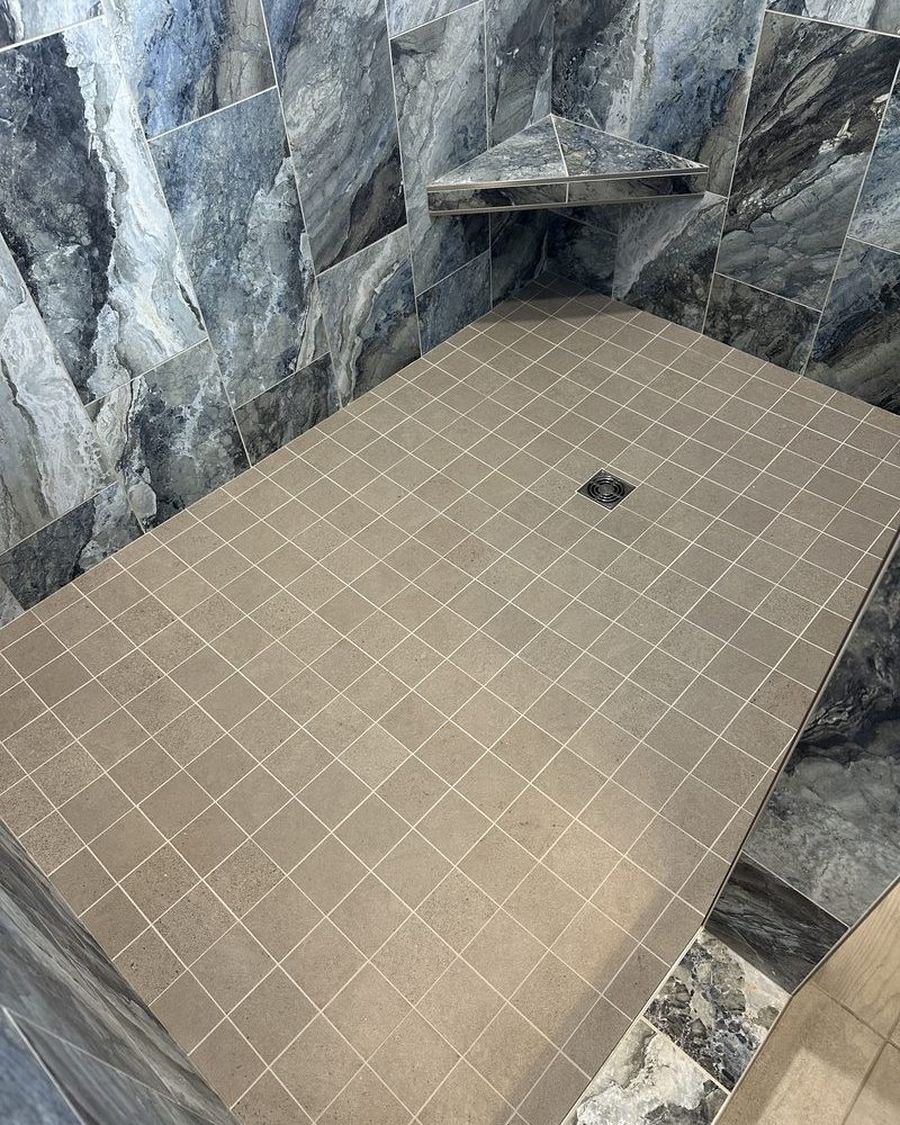
*Header photo: a finished shower floor, small mosaic tile sloped to the drain. Timeless Creations project.*


