Porcelain slab shower walls: how the seams disappear
Porcelain slab shower walls are large sheets of porcelain, often five feet by ten, set floor to ceiling so the shower has almost no grout lines. The seams between the panels disappear because we plan where they land before anything goes up, match the pattern across them, and fill each one with a color-matched epoxy as the panel is set.
That is the short version. The longer version is everything that happens before a panel touches the wall, because a slab only looks easy.
What a porcelain slab is
Porcelain slabs are fired porcelain made to look like stone. They are thinner and lighter than quartz or natural stone, they don't stain, and they never need sealing.
In a shower, that means a wall with the look of marble and none of the upkeep. There are no grout lines to scrub between the tiles, because there are almost no tiles. One sheet covers most of a wall.
The trade is that the installation has to be right the first time. A sheet that size shows every flaw in the wall behind it, and there is no second try once it is cut.
The wall behind the panel
The wall behind a large-format panel has to be perfectly flat and structurally sound. Tile can only be as straight as what it's sitting on, and a five-foot sheet makes that truer than ever.
A small hump behind a four-inch tile hides in the grout line. Behind a five-by-ten panel, it shows as a shadow across the face, or as a seam that opens at one end. So the wall gets prepped or rebuilt first, flat, plumb, and square, before any slab comes into the room.
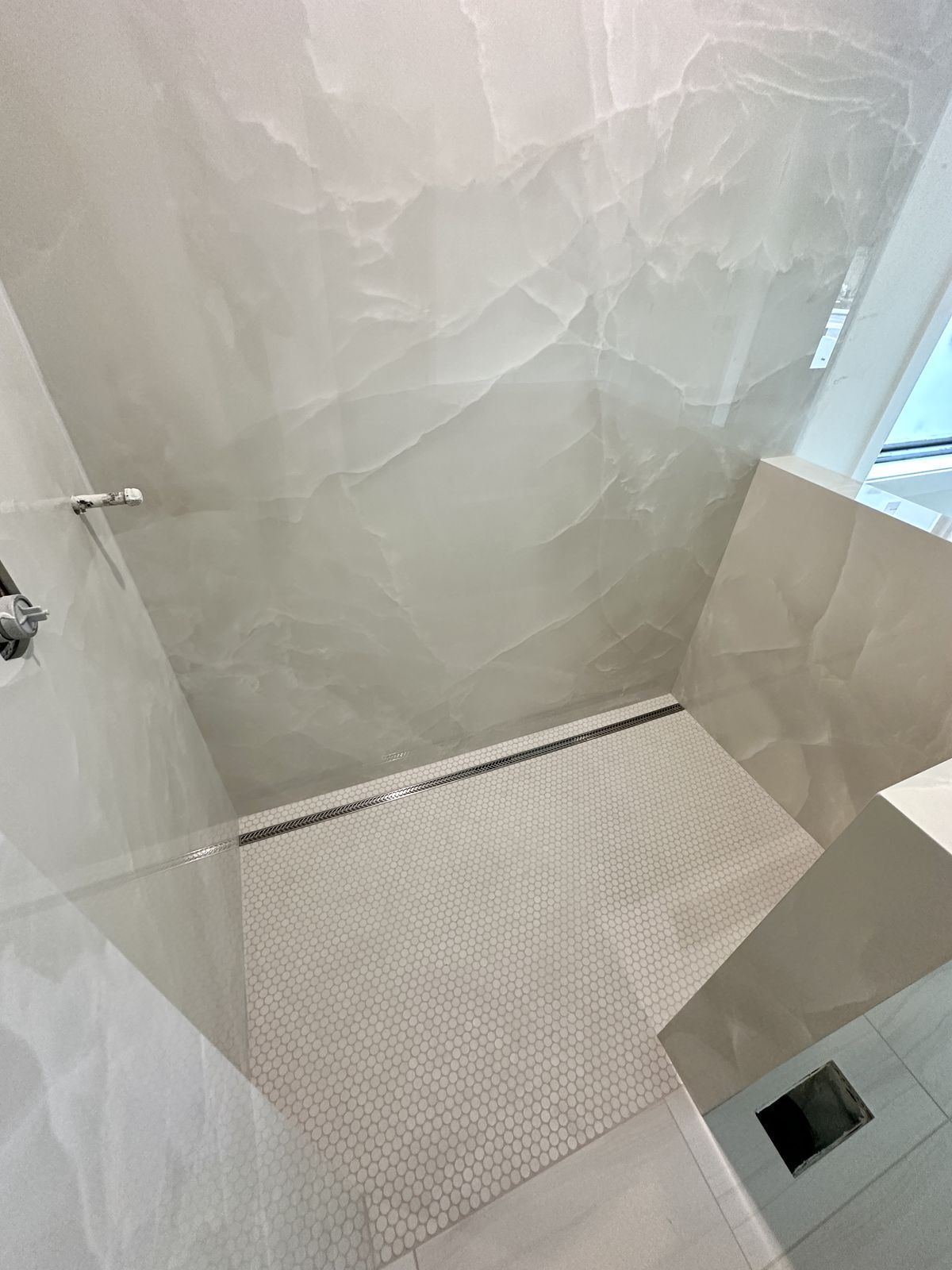
Under the panels, the shower is built the same way as every shower we do: a sloped concrete pan and a full waterproofing system, floor to ceiling. A linear drain along one wall lets the floor slope one way, so the panels run right to the edge of the floor.
Where the seams land
A seam is where two panels meet. In a shower there are usually only a few: the corners, and one or two on any wall wider than a single sheet.
We decide where every seam lands before the panels go up. A seam tucked into a corner is nearly invisible. A seam across the middle of the wall you face in the shower is not. So the layout is planned so the seams sit where the eye does not rest, and the pattern carries across the wall in one piece.
Matching the pattern across them
Veins and patterns have to line up precisely, so we lay the slabs out and go over the look before anything is cut.
That dry layout is where the wall is really built. We see how the veining runs from one panel to the next, where a seam would cut a vein in half, and which way a sheet should be turned. Only after that does the cutting start.
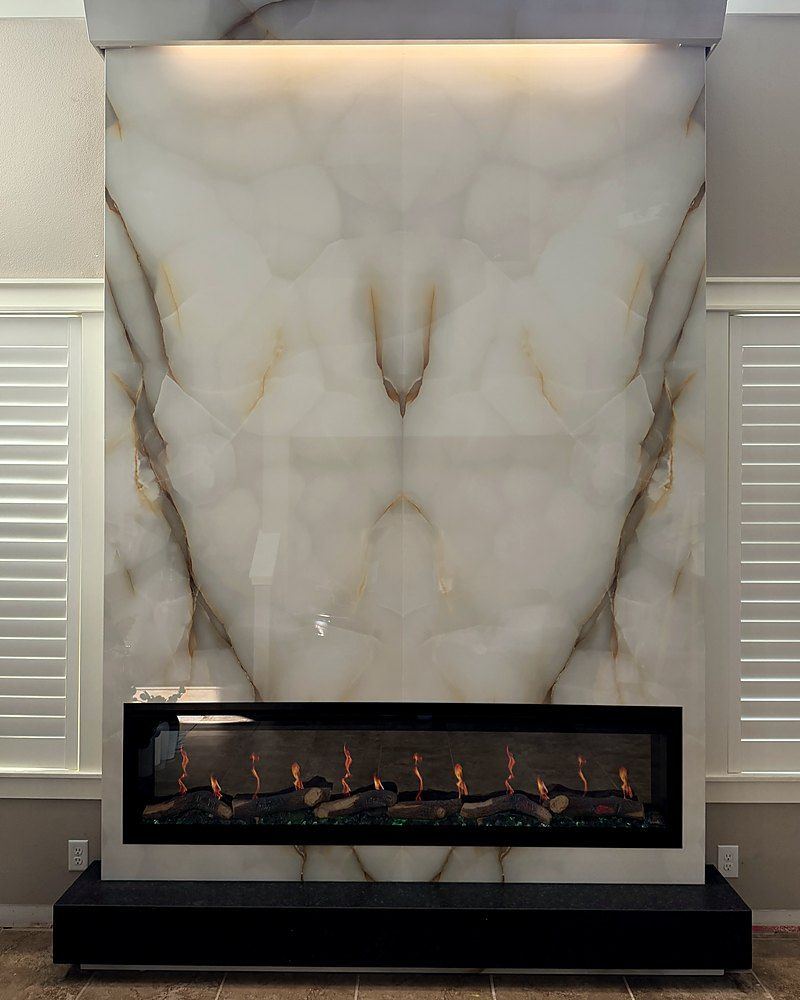
Book-matching takes the same idea one step further. Two slabs are opened like a book, so the veining mirrors down the center. The Avimor fireplace is built that way, two slabs floor to ceiling over a linear fire. The same can be done on the back wall of a shower.
The seam itself
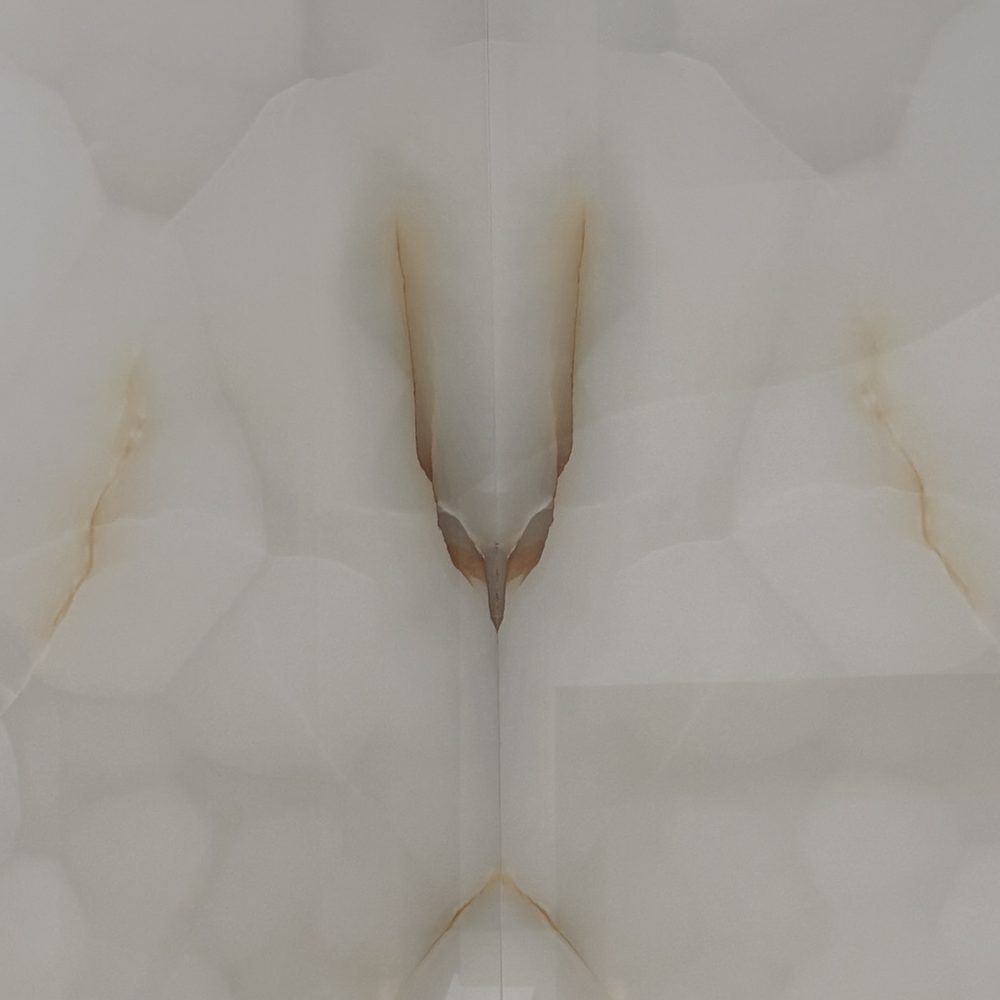
Each seam is filled with a handmade, color-matched epoxy just before the panel is placed. The color is mixed to the slab, not picked from a chart, so the fill reads as part of the stone instead of a line drawn across it.
Behind the panel, we aim for 100% thin-set coverage. A panel bedded fully has nothing hollow behind it, no movement, and no cracks later. A panel set on a few dabs of mortar sounds hollow when you tap it, and a hollow panel is one that can crack along the seam.
Then the seam is cleaned and the next panel goes up. You have to look for the seams, and in most cases they are hard to find.
What it takes on the day
Porcelain panels are one of the most demanding things we install, and one of our favorites. Planning and layout happen before day one. Once a space is prepped and ready, we can typically fabricate and install one panel per day.
That pace is the cost of getting the seams right. A panel cut wrong is a panel wasted, so each one is measured, cut, dry-fit, and set with the time it needs.
Questions people ask
Do the seams show?
We plan where they land, match the veins across them, and fill them with a color-matched epoxy. You have to look for them, and in most cases they are hard to find.
Can porcelain panels go over my existing shower walls?
Only if those walls are flat and structurally sound. Usually we prep or rebuild the wall first, because large-format panels require a perfect substrate. In a shower, that also means a sloped pan and a full waterproofing system under the panels.
Are porcelain slabs the same as quartz or marble?
No. Porcelain slabs are fired porcelain made to look like stone. They're thinner and lighter than quartz or natural stone, don't stain, and never need sealing.
How long does a panel shower take to install?
It depends on the size and the prep. Planning and layout happen before day one, so the install itself moves quickly. Once a space is prepped and ready, we can typically fabricate and install one panel per day.
Considering porcelain panels for your shower?
Floor-to-ceiling walls with almost no grout, over a concrete pan and a full waterproofing system. Read more on our porcelain panels page, call (208) 306-4004, or send us a quote request. We reply within one business day.
Every project is covered by our 2-year workmanship warranty, and enrolled in manufacturer lifetime warranties where applicable.
*Header photo: the Avimor fireplace, two book-matched slabs floor to ceiling over a linear fire. Timeless Creations project.*


